
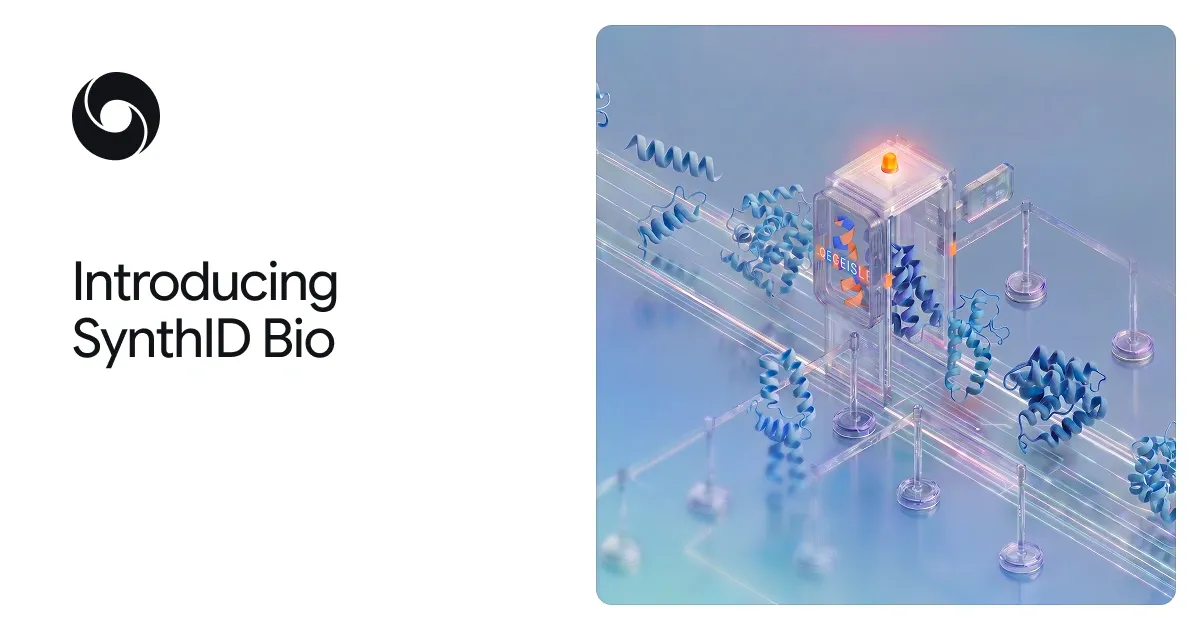
- Watermarks are embedded directly into protein sequences and predicted 3D structures and are designed to be detectable after synthesis.
- Method aims to preserve biological function — lab tests showed watermarked designs matched performance of unwatermarked versions.
- Approach includes model-level integration (fine-tuning parts of AlphaFold 3’s diffusion network) for near-perfect detectability.
- DeepMind reports early laboratory testing confirmed watermarked bacteriophages were functional in bacterial cultures.
- Work on watermarking bacteriophages was done with the Hie lab at Stanford and Arc Institute and lists named contributors.
- DeepMind says more technical manuscript details will follow.
- DeepMind frames SynthID Bio as a provenance and verification layer to strengthen biosecurity and scientific integrity.
- The blog notes challenges remain — robustness against deliberate tampering and extension to more complex biological objects require further research.
- Authors suggest pairing watermarks with provenance metadata or repositories for broader tracking.
Useful?