
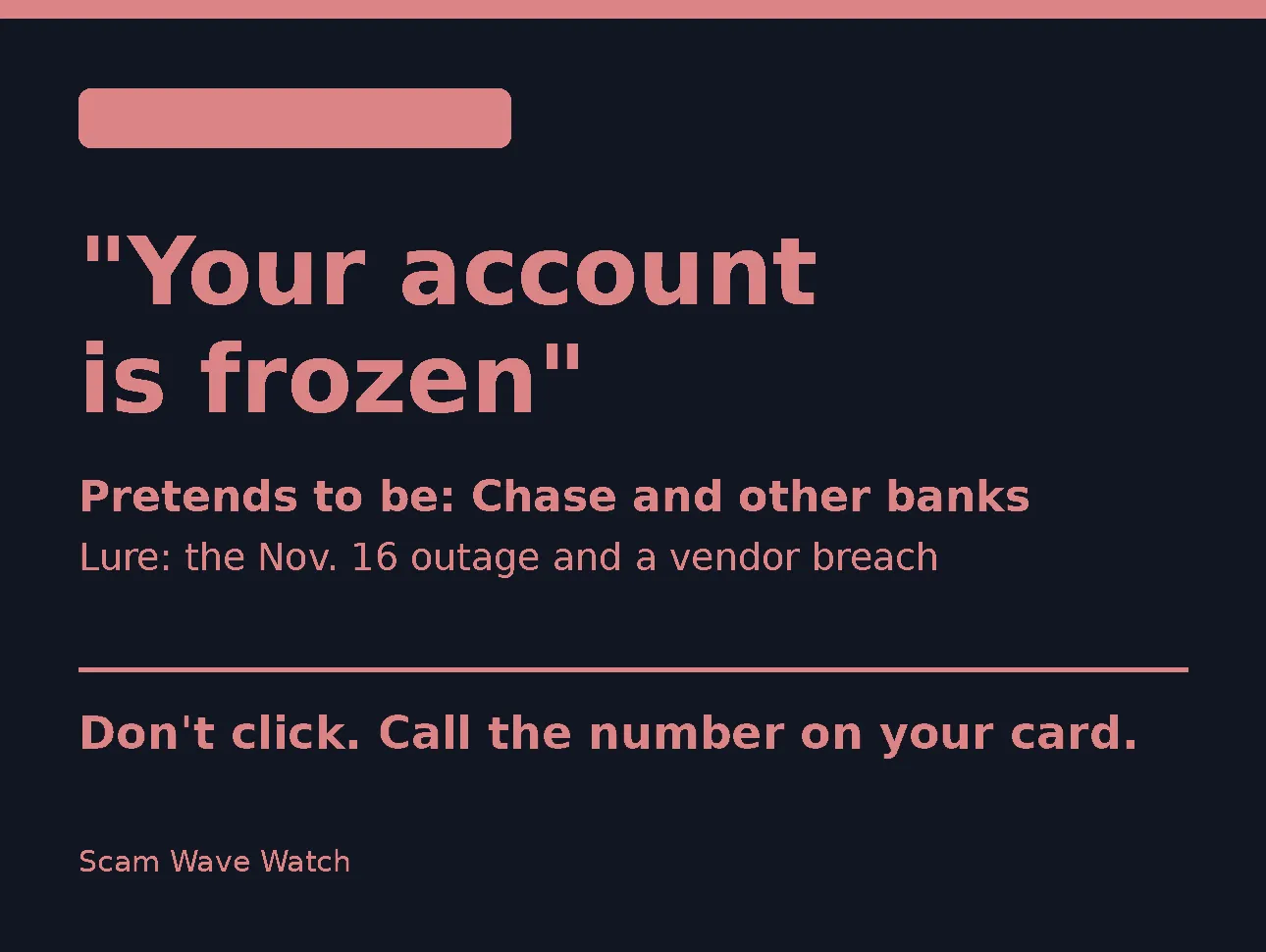
- Nov 16: a Chase software bug slowed online banking and delayed Zelle at several big banks. Nov 19: Chase said vendors were hit by a cyberattack that may have exposed some customers' names and emails. Chase says it will contact affected customers directly and offer free credit monitoring.
- Texts, emails, calls and app messages point to the outage or a security problem and push you to click a link or confirm details. Caller ID can be spoofed to show a bank's name or number. Leaked names and emails can make a phishing email look personal.
- Any unexpected alert that your account is locked. A link or callback number given in the message. Requests for your login, card number, codes or personal details. Your name in the message doesn't make it genuine.
- Don't reply, click or call back. Check your account in your bank's app or by calling the number on the back of your card. If you shared details, call your bank's fraud line first, then file a police report and report it at ReportFraud.ftc.gov. A free credit freeze adds protection.
Useful?