
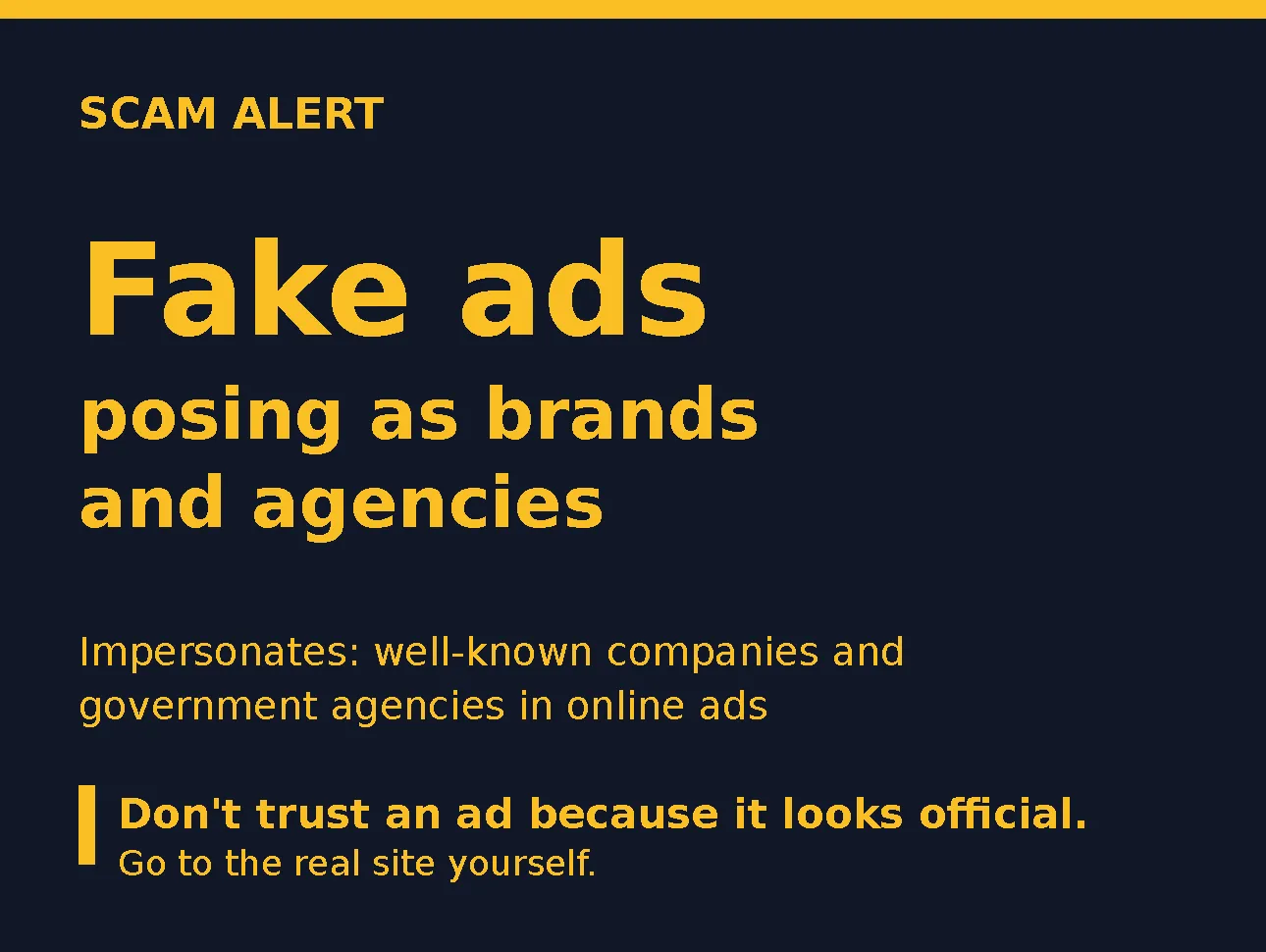
- Scammers pay to place ads, just as real companies do
- The ads copy the name and look of a known brand or a government agency
- They show up in social feeds, search results and shopping sites
- A click can lead to a fake store, fake support line or fake government service
- A trusted name or logo in a sponsored post or result is not proof it's real
- Check the web address you land on before entering anything
- Be wary of ads offering government services, refunds, benefits or tech support
- Pressure to pay or call right away is a red flag
- Skip the ad: type the company's or agency's address yourself or use its official app
- Don't pay, share personal details or call a number from an ad you can't verify
- Report impersonation ads at ReportFraud.ftc.gov and to the platform that ran them
- The FTC is weighing an update to its Impersonation Rule, or a new rule, that could require platforms to vet advertisers before ads run, give people a way to report impersonation ads, and investigate and remove scam ads. Public comments go through the Federal Register until November 30.
Useful?